Lower operating cost
Less paperwork, fewer in-person visits, faster reviews. Your team spends less time on each application.
IwC covers the entire digital ID journey - apply, prove, review, sign - and delivers a cryptographically signed digital ID straight to the user's mobile wallet, with full lifecycle control in your hands.
Built on ISO/IEC 18013-5 · W3C VC 2.0 · OpenID4VCI · ICAO 9303 · FIPS 140-3
Setting up a credential program from scratch means building cryptographic signing infrastructure, an identity-proofing pipeline, a reviewer workflow, lifecycle management, and standards conformance - before you issue a single credential. Get any layer wrong and the whole chain of trust breaks.
IwC gives you all of it as one platform. You bring the authority to make statements about people. We handle the machinery that turns those statements into credentials the rest of the world will accept.
Every credential moves through four stages, and the applicant is kept in the loop at each one.
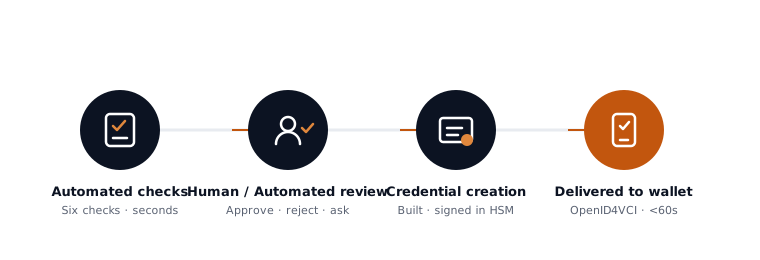
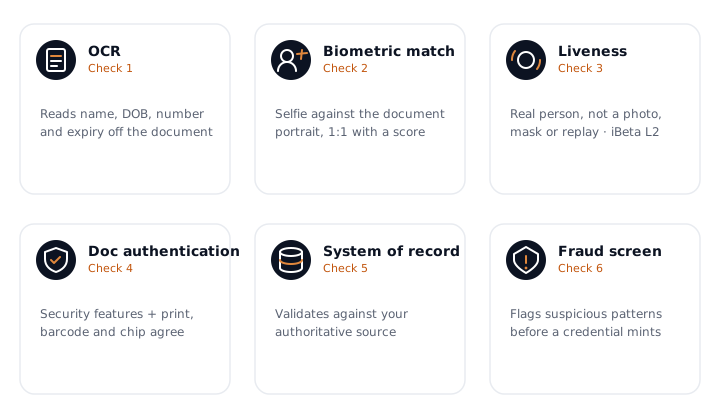
The applicant's submission - documents plus a selfie - runs through six machine checks in sequence. Text extraction, face match, liveness, document authentication, a system-of-record lookup, and a fraud screen. Each returns pass, fail, or needs-review. The whole battery finishes in seconds, not minutes.
Results land in the IwC Review Dashboard, where a reviewer sees the automated scores next to the submitted documents and biometrics. They approve, reject, or ask the applicant for more information. Machines do the heavy lifting; a person makes the call.
On approval, the Issuance Service builds the credential from the template you configured - exactly which fields go in, how they're structured - and signs it inside a hardware security module. Any later tampering becomes detectable the moment a verifier checks the signature.
The holder gets an OpenID4VCI credential offer by email, SMS, or push. They tap it, the wallet proves possession of the device key, and the signed credential lands in hardware-backed storage. Under 60 seconds, start to finish.
This is the part most platforms gloss over. Identity proofing is only as good as the checks underneath it, so here's exactly what runs on every submission.
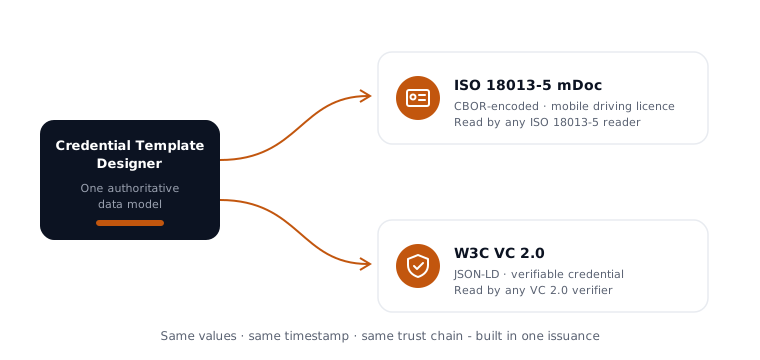
Here's a decision most platforms force on you: mDoc or W3C Verifiable Credential? Pick one, and you cut off half the wallets and verifiers in the world.
IwC doesn't make you choose. You define identity attributes once in the Credential Template Designer, and the Issuance Service builds both a CBOR-encoded ISO 18013-5 mDoc and a JSON-LD W3C VC 2.0 credential from that single source - in the same issuance operation. Same attribute values, same timestamp, same trust chain. Two representations of one credential, not two credentials to keep in sync.
You maintain one source of truth. You reach every wallet and every verifier. Nobody has to compromise.
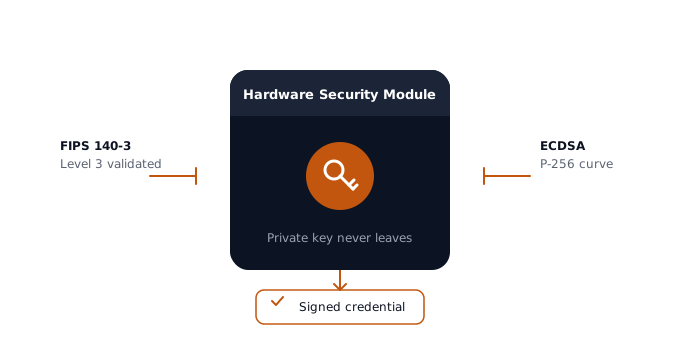
Every credential is signed inside a FIPS 140-3 Level 3 validated hardware security module, using ECDSA on the P-256 curve. Private keys are generated in the HSM and never leave it. Not to a config file, not to memory, not to a backup. That’s what makes the signature unforgeable - the material needed to forge it exists only inside tamper-protected hardware.
Per-claim SHA-256 digests mean a verifier can confirm each attribute independently, which is also what lets holders share one field without revealing the rest.
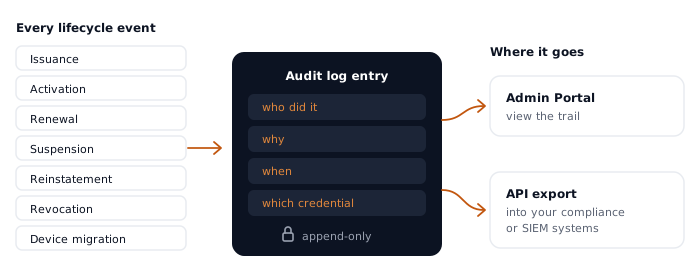
A credential isn't done the moment it's issued. Things change - people move, statuses change, devices get lost. IwC gives authorized operators full control over the whole life of a credential.
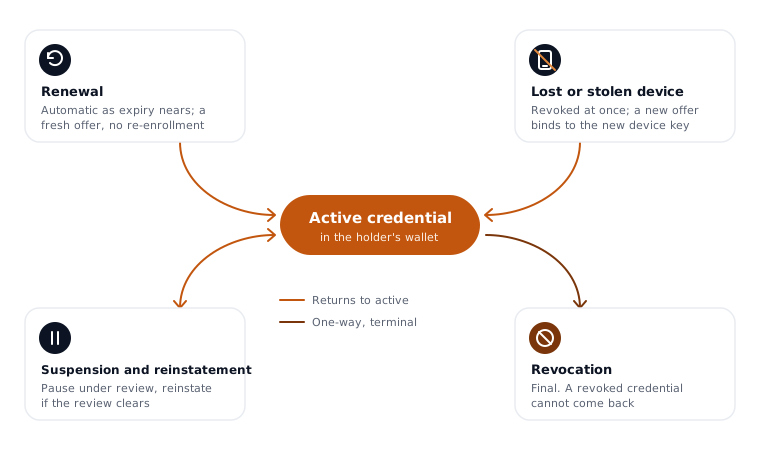
For offline scenarios, mDoc credentials carry pre-generated Mobile Security Objects with staggered validity windows, so an offline verifier always has a fresh, valid object to check - even if the holder's phone hasn't seen the network in a while. The wallet quietly refreshes them in the background.
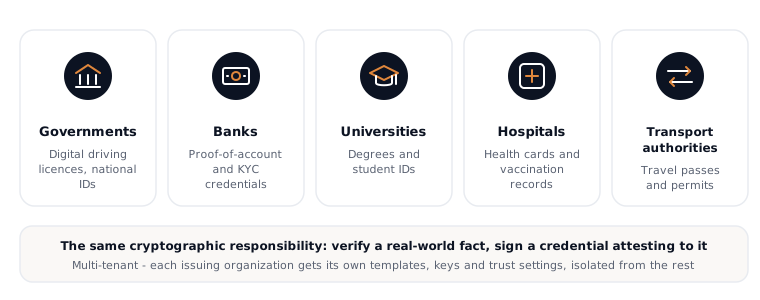
The issuer role is broad on purpose - plenty of organizations have the standing to assert facts about a person.
Less paperwork, fewer in-person visits, faster reviews. Your team spends less time on each application.
Credentials live on the phone, ready to share in seconds. No cards to carry, no documents to print, no office to visit.
Built-in identity checks and standards-based trust cut fraud and shorten the road from application to issued credential.